Wednesday, March 30, 2011

From The Rolling Stones to Tree Farming


Rock and Roll History is built on some interesting musical pillars and I met another one yesterday. Chuck Leavell was here during cherry blossom season to talk about his new book, The Rolling Stones, the blues and to tickle the ivories at the National Press Club for  a handful of reporters.

Leavell, in a grey suit and black sweater, sporting curly white hair and trim white beard,  seemed to be a figure more from an Atlanta country club than the world of rock bands. Perhaps that’s because between sessions and tours, he’s a gentleman tree farmer in Georgia,  an environmental advocate, author and entrepreneur--as comfortable with Mick Jagger as with Sen. John Kerry.

He began by describing  how he got started in music--listening to his mother play piano and noodling around on his own until at age seven he announced to his mother: “I want to be a musician when I grow up!”  Her response: “Now honey, you know you can’t do both.”

Inspired by Ray Charles and the sounds of Memphis soul, he made his way to Macon, Georgia and Capricorn Records, landing a job in the re-invented Allman Brothers Band in time to record Brothers & Sisters. Next it was his own group, Sea Level for five years and a lot of time as a studio musician. (His current work is with Martina McBride and John Mayer.)

In the early 1980s, he got the call from The Stones and has been touring with them ever since, often serving as “music director” to set up playlists with Mick. He can be heard on Steel Wheels, Voodoo Lounge, Stripped and most other recent Stones' CD's.

Leavell seems almost as passionate about the environment as he is about music. Growing a Better America is his third book about conservation and sustainable growth.  He was on the board of the American Forest Foundation for six years and is co-founder of the eco web site Mother Nature Network (www. MNN.com) which, he proudly noted, has just passed the EPA web site in terms of hits.

He insists he is not anti-growth but says, “The choice is between rapid, rampant and reckless or smart, strong and sustainable…something that is possible only if we all choose to do it.”

Here are some other tidbits on the environment.
On the loss of farm and forest land: "Across the United States we are losing more than 2500 acres of land a day to development…and half is covered in impervious surfaces."
On the value of inventing cellulosic fuels: “If we could make that kudzu into basic fuels, we could save the world."
On global warming: “By 2030 there will be no glaciers left in Glacier National Park.”

Here are some music notes.

His new CD, Back To The Woods, a tribute to pioneering blues piano players, is almost finished (Keith Richards plays on How Long That Evening Train Been Gone) and is set for release in August.

Next year marks the 50th year of the Rolling Stones and while he does not know if there will be a new tour,  “I certainly hope so, I am ready when they are.”

On Keith’s autobiography: “I loved it, read every page. I was there and even I learned some things!”

With that he sat down at the piano and ripped off a rendition of  Down The Road that seemed to channel a little Jerry Lee Lewis.


Friday, March 25, 2011

Ace Ventura Meets Bishop Tutu: Documentary Review

One of Hollywood’s most successful film directors returned to J.E.B. Stuart High School in Falls Church, Virginia this week to present his latest work, a documentary exploring, among other issues, the connections between spirituality and science, wealth and happiness, and  how one goes about changing the world. The film, titled simply I AM,  is the best documentary production I have seen since this year’s Academy Award winner, Inside Job.


 Its creator, Tom Shadyac, is one of the more intriguing characters I have ever run across. With long dark hair down to his shoulders, a puckish sense of humor and the self-effacing  style of a monk who has renounced millions in search of the meaning of life, he charmed a crowd of more than 800 high school students, their parents, his classmates and curious neighbors. “Last time I was on this stage, I was playing a toilet,” he began, adding that he later used the talking toilet idea in a Jim Carrey movie. Long before he directed such hits as Ace Ventura, Bruce Almighty and The Nutty Professor, he was cracking wise doing the daily PA announcements at Stuart and playing basketball.  From a start as a joke writer for Bob Hope, he became the Hollywood Golden Boy with  huge estates, private planes and limousines. A serious bicycle accident and a severe concussion changed everything for him.

As he describes in the movie, he and a crew set out to try to answer two questions: What is wrong with this world?  What can we do about it?  His interviews with philsophers, theologians, authors and scientists are woven together with a cornucopia of visual images chronicling the history of western civilization and the evolution of modern science along with its influence on popular culture and politics.  Since he is a feature film director, the music for the sound track is lush and a wonderful counterpoint to the images.

Bishop Desmond Tutu, Howard Zinn and others offer some fascinating insights about the human character,  the science behind how animals and people are hard wired to relate to each other and how many believe our lives are controlled more by our hearts than our brains.  I don’t pretend to be able to evaluate the science or the religious philosophy (he includes all faiths) but I found it thought provoking and uplifting. I was amazed at what scientists are doing to measure and test the powers of human emotion.

Among the interesting tidbits:  Charles Darwin mentioned “survival of the fittest” only twice in Origin of the Species. He used the word, “love,” 90 times. The film raised powerful questions about how Darwin’s work has been used and distorted to justify many subsequent social models, including the culture of greed that drives Wall Street and the politics of capitalism.

As one of the interviewers said, in effect, if we don’t discover new ways to live on the planet, we won’t be around in two hundred years. And from Bishop Tutu: The truth of who we are is  that we belong.


Tom Shadyac is a religious person and he is messianic about his mission to create change. But he is careful not to prescribe a faith, preferring instead to describe his message as “not about saving the world, it’s about personal revolution.”   You can find out more showtimes at his website:  www.iamthedoc.com.
(Note there is a religious film out with a similar title)

Wednesday, March 16, 2011

News and Notes


The ways in which traditional rock and roll (that used to be an oxymoron) permeates the mainstreams of our culture continue to intrigue me.  Take for example, the Washington Ballet company which recently presented two works. The first was Trey McIntyre's "High Lonesome," a family portrait using the music of Beck.  In the words of The Washington Post's reviewer Sarah Hazlack, McIntyre  is a hip choreographer "...it's clear that the company is comfortable with his uber-contemporary style." The second was Christopher Bruce's "Rooster," which she described as a moody tribute to The Rolling Stones.  She lamented that "Bruce's choreography seemed to call for a lyrical quality that was largely absent.  Mick Jagger's mournful vocals in Ruby Tuesday begged for a more tender, woeful treatment, and the hypnotic "Paint it Black" needed a dash of brooding anguish." The critic reports other major dance companies have presented works using songs by George Harrison, U2 and Radiohead.  Certainly a different take on Dance Music.


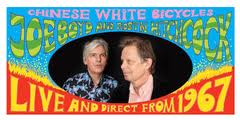
Record Producer Joe Boyd (Incredible String Band, Fairport Convention, REM) has come up with a new twist on how to give a memoir legs....take it on tour. According to a March 9 profile in The Washington Post, he has teamed up with Robyn Hitchcock  to combine reminisces from his book, White Bicycles: Making Music in the 1960s, with reprises of songs from the glory days when he produced and managed London's UFO Club.

Heard an interview on Bob Edwards radio show(XM) from another aging songster who has written a memoir.   Charles Fox, who no doubt made a bundle doing theme music for such TV series as Wide World of Sports, Monday Night Football and Happy Days as well as 100 film scores, was also a pretty fair music composer. His book is titled, Killing Me Softly, after the song he co-composed, Killing Me Softly With His Song for Lori Lieberman which became a monster hit for Roberta Flack. He is also credited for the Jim Croce hit, I Got A Name.


Speaking of Roberta Flack, it was touching to see footage of her playing at a bar on Capitol Hill as a young woman during a special that WETA did a few years back on Washington in the 1960's. Another interesting clip was of The Beatles arriving at Union Station in Washington before their first concert in the U.S., the day after the Ed Sullivan show.  When Jimi Hendrix played at the Ambassador Theater in DC,  two British Groups were playing at DAR Constitution Hall.
Herman's Hermits were the headliners so the opening act, The Who, got done early enough for Peter Townshend to catch Jimi's second set.

One other media note. Happened across a radio program about music the other weekend.  Sound Opinons, produced out of  WBEZ in Chicago does a mix of R&R history and new reviews. Our local NPR outlet has buried it on an HD channel but previewed the  show one Sunday night on the regular frequency(they did an interesting history of Elektra Records).
Two former newspaper rock critics, Jim DeRogatis and Greg Kot have been doing this for some years on commercial and public radio stations. I plan to check them out at www.soundopinions.org.

Tuesday, March 8, 2011

Happy 45th


The nameplate pictured here is among the rock and roll detritus that I have inherited, collected, kept over the years. Too valuable to trash (it's cast iron) and not easy to sell (imagine the shipping cost), and  hard to display (did I say it was heavy?) it has hung around like so many collectibles. It embodies Neil Young's age old question: old enough to repaint or young enough to sell?

The comet-like career of Buffalo Springfield came to mind last week when a deejay for for the Fordham radio station (WFUV.org) mentioned  that the group had been founded on March 3, 1966 (surely there's a plaque somewhere) and several of the original members were working on a reunion album. This prompted some nostalgic thoughts about what great music they made and what might have been if Neil Young, Stephen Stills, Richie Furay, Jim Messina and Dewey Martin (along with co-founder Bruce Palmer and Doug Hasting) had been able to keep it together for even a handful of years.

At the start they had the makings (and talent) of a supergroup. Their (modest) hits with Buffalo like "For What's It Worth," "Sit Down I Think I Love You" and "Kind Woman" are still played today and often get used in films and documentaries about the1960's and '70's. The late Lillian Roxon in her Rock Encyclopedia said one song on the first LP was "a milestone." ""Go and Say Goodbye," written by Stills in 1965, was the first country-folk song and a prophetic look ahead to the later emergence of country rock."

I would have  loved to have been a fly on the wall (or a roadie) when they toured with the Byrds and the Beach Boys; talk about the boys on the bus! Before a third album could be released, they disbanded with most of them carving out future Hall of Fame careers. Stills and Young joined Crosby and Nash before going on to solo careers (and several reunion gigs). Jim Messina and Richie Furay founded  Poco which, among other things, blazed a trail the Eagles later rode in on.

Besides the persistent question about what might have been (Bruce Springsteen says: "The trick in keeping bands together is always the same: Hey asshole, the guy standing next you is more important that you think he is."  RS 2/5/09), is  how they got their name.

Legend has it that the Canadians (Young and Palmer) met the Americans (Stills and Furay) during a traffic jam in Los Angeles.  Some accounts talk about an asphalt steam roller at the scene made by Buffalo Springfield. The company came about at the turn of the century when the Buffalo Pitts company merged with Kelley Springfield and the steam engines that once worked in the farm fields went to work building roads.

As someone who painted a steam engine one summer, I guess I'll keep my Buffalo Springfield nameplate awhile longer to remind me of simpler times and better music....because nowadays Clancy can't even sing.

Tuesday, March 1, 2011

Aging Rockers--Part 1

Picked up a Rolling Stone the other day and was struck by graying of its content. This is in sync with the aging of the Baby Boomers who made it a success back in the 1960's and '70's when it was a counter-culture music mag that made Hunter Thompson and gonzo journalism part of our history.  Once a subscriber, I lost interest as it moved into the eighties, hip-hop, rap and Hollywood celebritology. Lately, I have been returning for the gutsy reporting of Matt Taibbi and others.


RS 1122 (Jan. 22, 2011) had an uncanny respect for the elders of the music business in both large and small ways...some surprising and some part of the routine music biz news.

First off was a  feature on Robert Plant out on tour with Band of Joy, putting Led Zeppelin reunion gigs behind him and prowling music shops across the South for real roots music on vinyl and cassettes. Of course his reinvention produced last year's award winning duet with Allison Krauss, Raising Sand.

Elsewhere was a brief book review about the Zeppelin's '75 tour and a story about how Warner Records is opening up a recently discovered archive of 70's memorabilia that includes old photos of Zep and Cream and a Dylan contract from 1974 and a Ray Charles contract from 1952 (Wouldn't you like to read the residual clauses from those?).

Then there was a nice column about John Mellencamp's "new" tour of "old" classics and rarities, plus a plug for his movie in the works.

The 2011 R & R Hall of Fame Class might make the cover of the AARP magazine: Alice Cooper, Neil Diamond, Tom Waits, Darlene Love and Dr. John. A full-page obituary was a nice tribute to Captain Beefheart  and his creative quirkiness.
Short snippets and photos highlighted the Kennedy Center Honors for Sir Paul McCartney, Merle Haggard, and Willie Nelson; and how Crosby, Stills and Nash have split from producer Rick Rubin after two years of work recording cover songs. Aretha Franklin sadly is battling cancer.

Are the editors pandering to boomers who have the money to buy the magazine or watch the premium cable shows that dominated the advertising pages? Or is it a tribute to the fact that the music of the good ole days is aging well and its creators are still productive?

Speaking of good ole days, a couple of interesting music specials are airing this week on PBS (check local listings).  Tonight at 8 pm (EDT) it is a tribute to Motown at an "In Performance at The White House" taped last week. John Legend and Jamie Foxx led the parade of cover artists and Smokey Robinson and Berry Gordy join in music and commentary (as does the Pres).

Tomorrow night at 9 (EDT) "American Masters" looks back at singer songwriters who got their start at the legendary "Troubadour" club in Los Angeles. Jackson Browne, Bonnie Raitt, James Taylor and Carole King are among those who swap tales (and we hope) play some music.

Remember these and other music shows, such as "Austin City Limits" and "Soundstage," as Congress contines to cut budgets for the arts  and other so-called discretionary funding.

Monday, February 21, 2011

Session Man to Star

Which Number One hit of the late 1950s had a one-word lyric?

Come on give it a shot (answer to follow).


I got interested in this subject when old friend and guitarist John Mergendoller sent me this trivia from his flatpick list serve. Session players and their careers are intriguing because of their non-linear paths. In this case the song created by session men and written by sax player Chuck Rio stayed on the charts for 19 weeks, sold six million copies and won a Grammy. Although some may call it an instrumental, we all remember it for the lyric:

Tequila!

Among those who later played with The Champs were Jim Seals and Dash Crofts and a young guitarist who also toured with the Beach Boys when Brian Wilson decided to stay at home: Glen Campbell.

In addition to his Rand-McNally hits (Galveston, Phoenix, Wichita and Southern Nights), he  got his own television series, his own golf tournament (in LA) and eventually his own theater in Branson, Mo. He also appeared in the first True Grit film. He learned how to do supporting roles back in his session days, I imagine, which must have been pretty heady.

According to the R&R encyclopedia, he played for Frank Sinatra, Rick Nelson, Johnny Cash and the Mamas and Papas, as well several of Phil Spector's bands who created the walls of sound. His session buddies, known as "The Wrecking Crew," included another future star, piano player Leon Russell.

Glen's stats are impressive, 70 albums, 45 million in sales and in 1967 he won four Grammys, including album of the year in the pop division and a second for a different album in the country category.
Take that Lady Gaga!

Monday, February 14, 2011

Grammy Gimmicks


In recent years, I had given up on the Grammys…too much hip-hop, rap and obnoxious commercials but this year for journalistic reasons I decided to stay with it.
What I found was another entertainment event midway between the SuperBowl and the Oscars that was a made-for-media event which the media celebrates and the celebrities mine for advertising opportunities. Is Taylor Swift selling hand crème or downloads. Eminem should use some of that ice tea he’s hawking to put out the fires on the stage behind Rhianna. Of course, the merging of content and advertising in an M.C. Escher miasma is nothing new.  But it certainly seems to hit new heights around this time of year.

The show came off more than a little schizophrenic. Are we celebrating new music or parading out aging rock stars in hopes that the boomers will show up at Target tomorrow? Is it a music show or a full employment program for dancers, choreograhers and lighting designers in Los Angeles? It is an homage to the power of smoke and mirrors and if they can’t figure out who the real stars of 2011 are, “give ‘em the ole razzle dazzle.”
First put an anchor blonde in a corner to endlessly tease the stars of yesteryear (Dylan, Jagger, Streisand) then when they do show up for their three minutes, surround them with masses of musicians and back up singers.  At least Babs and Bob sang their own songs(in Bob’s case we use the term loosely but if you don’t know the words to Maggie’s Farm, it’s too late for you). And Mick’s tribute to Solomon Burke has him doing a song that for the last thirty years has been associated with Jake and Elwood and their Fabulous Show Band.

What was up with the mini-mosh pit populated by those people who stand up to shake Jay Leno’s hand at the open of the Tonight Show? I hope they got paid good money to stand there holding their hands in the air and blocking low-angle camera shots.  Often the random hands looked like someone reaching for help from quicksand (or was that a promo for Survivor XXX?)

The awards all seemed to average out with something for everyone (as usual) but I was struck by Best Rock Album nominees: Jeff Beck, Pearl Jam, Tom Petty and Neil Young.
And the winner was:  Muse.  Of course they had just performed a song with an amazing light show. (Dylan got no light show or audience cutaways but Streisand got a symphony orchestra.)  I will check out the new albums by some of the also rans.

I like watching Lady Gaga and Katy Perry; they put on great shows.  But I don’t seem to be listening to their music.

Can it really be they have been doing the Grammys for 53 years? Was  Volare  the first record of the year? And others were Moon River, Bridge Over Troubled Water and Beat It.  This year it was Need You Now which Lady Antebellum informed the audience that they had performed at last year’s Grammys. (?)

Finally I have to say I discovered Arcade Fire this year and really like them….crisp, original and energetic. Of course you could not see them for the fusillade of flashing lights that blinded the audience and the cameras when they performed their first number. They got better treatment on the encore.

“It’s quarter to one and I need to quit now”