Thursday, August 29, 2013
Live in Peace Linda Ronstadt
Like millions of fans I was saddened to hear the news of Linda Ronstadt's Parkinson's disease, that is effectively ending her singing career, one of the most amazing musical journeys of her (and our generation). Although she had faded from the dizzying heights of her glory years (TIME covers, dating Jerry Brown and George Lucas), Linda pretty much did it all and reinvented herself so many times that she seemed to have multiple personalities. She was present at the creation of folk-country-roots rock, did the Pirates of Penzance in Central Park, had platinum albums of pop standards with Nelson Riddle, sold millions of copies of traditional Spanish songs and co-anchored the power-pop Trio albums with Dolly and Emmy Lou.
My first reference book, Lillian Roxon's Rock Encyclopedia, lists her as Linda and The Stone Poneys with two interesting facts. Different Drum (still getting airplay after 46 years) was written by Mike Nesmith of the Monkees fame and her guitarist then was Kenny Edwards who rejoined her on all the hit albums of the 1970's.
Has anyone had a better string than she did during that era? Heart Like A Wheel, Prisoner In Disguise, Hasten Down the Wind, Simple Dreams, Living in the USA. She had the voice and the emotional involvement to make classics out of work from the best song writers of the time, whether it was Warren Zevon, Roy Orbison, J.D. Souther, Lowell George, Jagger & Richards, James Taylor, Neil Young, or Anna McGarrigle. They could perform their songs, she could sing them. Her voice was magical and it seemed to soar out of the stereo speakers.
Our paths sort of crossed three times. The first was at the Indiana State Fair in 1977 when she was wearing red white and blue tops and hot pants. She was the rock star who could croon the paint off your pickup with a Hank Williams song.
The second time was in DC when we saw her at a theater during the Canciones de Mi Padre tour. Our lack of Spanish language skills made the evening less than expected.
The third connection was in the mid-90s during a video shoot in Tucson, Arizona when the sound guy we hired turned out to be her brother, Mike (her other brother was the sheriff there for ten years). Mike was a nice fellow but his beat-up old International Scout ran out of gas enroute to our location and nearly sabotaged the day.
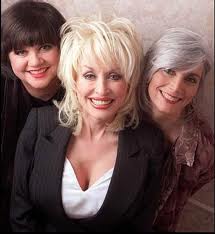
The Trio albums are still some of my most listened to as well as her 1995 CD, Feels Like Home, which includes her takes on After The Gold Rush and High Sierra and has Alison Krauss on fiddle for several cuts.
Linda has enough Grammys and gold and platinum albums to fill a museum. No doubt she has more than enough stories to fill her new memoir, Simple Dreams. She certainly captured a little piece of my heart with her music.
Wednesday, August 14, 2013
One Night with Janis Joplin
Whether we know it or not, we want our blues singers to be miserable.
In fact, we want them to die.
--One Night With Janis Joplin
Our musical memories tour continued this week with a trip to Washington’s Arena Stage to spend One Night With Janis Joplin before it heads to Broadway this fall. I arrived with some skepticism about just another tribute show for boomers willing to pay for nostalgia.
I left with my ears ringing and the semi-exhaustion of a rock concert.
My first clue that we were in for something different was the eight-piece band (all with 60s style shoulder length hair) which sounded as good or better than I remember the muddy studio albums from Big Brother & The Holding Company. And they were much more versatile, easily moving back and forth from ballad to hard rock to blues.
The star, Mary Bridget Davies, embodies Janis so convincingly (after a national tour of Love,Janis and tours with the current Big Brother band) that you are no longer making comparisons with the original; you are just enjoying the ride. She can move from sad reflection to foot-stomping, hair-flinging blues shouting in the space of a guitar lick.
After warming us up with My Baby and Down on Me, she tore into Piece of My Heart like a freight train out of control. It was all the audience could do to chant, “Come on, Come on,” and wait for the aural crash. Not sure whether it was the rush of nostalgia or the authentic sound but it gave me goose bumps.
The musical numbers were tied together by soliloquies in which Janis talked about her childhood (listening to the Chantelles on 45s) her love of the blues (The blues is just a bad woman feeling good) or her frustrating search for love (No man will be able to do to me what that audience does).
Woven through her musings were reflections on her musical influences and heroines. This is where the show kicked everything up a notch in the person of Sabrina Elayne Carter in the role of “blues singer.”Her opera-trained voice and fabulous costumes traveled a parallel track as she took on the songs of Janis’ personal heroines. Starting with Summertime from Porgy and Bess, Carter took turns as Odetta, Bessie Smith, Nina Simone and Aretha Franklin. Each time the songs segued from the traditional versions to a Davies/Joplin blues-rock interpretation. Carter’s beautiful voice often overshadowed Davies’ but the contrast seemed intentional. The smooth stylist versus the blues belter; the traditional versus the rebel. When they teamed up on Aretha’s Spirit in the Dark to close the first act, it was like a battle of the bands.
Songs of the second act underscored the irony of Joplin’s instant fame and personal demons with a cloud of irony hanging over several, including I Shall Be Released, Me and Bobby McGee, Ball and Chain and the incredibly sad Stay With Me.
This show was about the music not the tragic ending but throughout the monologues Janis is reminding us of what the blues are about. It’s the carrot, you never get to, she notes. Or this thought, which seemed apt given the age of the audience.
The blues are about time. One day you wake up and look in the mirror and wonder where it all went. That’s the blues.
It’s hard to believe that it’s been more than four decades since Janis left the live stage that she so electrified with her full tilt boogie approach to music and to life.
Despite the passage of time, we still know all the words to Mercedes Benz so we sang it a cappella back to her as part of the encore (and standing ovation) and as a thank you for the music and the memories.
Tuesday, August 6, 2013
Bruce, Mick, Sting (and Darlene): 20 Feet from Stardom
It’s unusual to see a rock music film in which Bruce Springsteen, Mick Jagger and Sting are not the front and center stars but rather the genial patriarchs praising their backup singers and ruminating on the fickleness of music success.
That is just one of the turnabouts in Morgan Neville’s great new documentary about the men and mostly women who have shaped modern musical history from the back of the concert stage and recording studio.
The film grabbed me a few minutes in when Darlene Love joined the original Blossoms in an empty studio and broke into song:
I met him on a Monday and my heart stood still
Da Do Ron Ron Ron, Da Do Ron Ron.
Time has not stood still for Love, and her golden-voiced fellow singers, Merry Clayton, Claudia Lennear, Lisa Fischer and Judith Hill; their ups and downs would make for many a blues song. As tempting as it is to try and recount their fascinating (and frustrating) careers, I won’t spoil it. Just go see it.
Okay I can’t resist. Here are some of my favorite highlights
--Luther Vandross singing backup for David Bowie
--Billy Preston playing organ for Ray Charles (and the Raylettes)
--Tina Turner & the Ikettes
Finally there are the album covers serving here as means of preserving history and used creatively to track the careers of the singers, the groups and our personal history, which seems inextricably benchmarked by the music we grew up listening to.
20 Feet from Stardom manages to chronicle the era, tell some wonderful human stories and showcase the music they gave us…all at the same time. The blending of vintage clips with modern musical reunions is flawless.
Do see this in a theatre as the Dolby Surround Sound alone is worth the price of admission.
Thursday, August 1, 2013
Rock Musicals: Grease to Mormon
Attending two musicals in four days based on rock and roll but were created almost two generations apart got me thinking about how much the music once created for records and radio play has become such a huge creative influence in our culture. The experiences, seeing Grease done by a community theater in a high school auditorium and Book of Mormon by a national company seemed to bookend the spectrum of production values.
For starters, guess which musical this Wikipedia description refers to: “Raunchy, raw, aggressive, vulgar.” That was a reaction to the earliest version of Grease when it began in Chicago in 1971. Clearly it has been homogenized and sanitized over the years although it can still hit some “taboos” for the sake of humor. By the early seventies, recreating the music (and teenage traumas) of the 1950’s could find an audience.
It was on Broadway for a then record 3,388 performances, then twice on film (look for Stockard Channing in pajamas) and then revived again twice on Broadway. The stage version has winning numbers like, "Look at Me, I’m Sandra Dee" and “Born to Hand Jive” and the film gave us top-40 hits like "Hopelessly Devoted To You" and “You’re the One That I Want” and today’s productions mix songs from both. In watching the Alliance Theater production at Chantilly High, it was great to see actual kids playing kids, enjoying the same music as their (grand?) parents and reminding us of those days of sock hops, drive-ins, and malt shops that now we only see on television or film.
Book of Mormon is a different breed of cat but when they dimmed the lights and a light show swam across the walls and ceilings, it was vintage psychedelia from the golden age of Hair and Woodstock. Clearly the South Park guys and their collaborators are products of a rock and roll generation (or two) and know how to tap into that music for energy, nostalgia and comedy.
So it seems like this music is everywhere. On Broadway it is Berry Gordy’s Motown The Musical and Cindi Lauper’s Tony winner, Kinky Boots. In Washington, there is a rock musical called Spin and the Arena Stage’s One Night With Janis Joplin is in its second run before heading to Broadway this fall. Million Dollar Quartet is returning this fall
Stephen King and John Mellencamp have conspired with T. Bone Burnett to create a musical called Ghost Brothers of Darkland County. It is on a limited tour this fall but it’s also a CD and ebook. When the threesome appeared on Stephen Colbert earlier this summer, Colbert summed up the project this way: “You’ve got a ghost story of murder and death, you’ve got love lost and someone with their head eaten off. Are these upbeat summer fun songs?”
Monday, July 15, 2013
Rev. Paul McCartney’s Revival Meeting
This weekend Brother Beatle brought his traveling musical salvation show to the nation’s capital to try to end the rainy season and lift our spirits with the kind of rollicking music he’s been making for more than five decades. And it worked. The music was marvelous and the magic kept the children dry.
From his opening songs, Eight Days A Week and All My Lovin, he had us under his spell, which he kept going through more than two hours of ballads, up-tempo toe-tappers and hard rock riffs. His current band, while not up to the vocal harmonies of the original Boys from Liverpool, is tight and gives him such solid support; you stop comparing them to The Beatles or Wings.
Paul still has the mellow voice, the boyish good looks and charming patter that made him a heartthrob in 1963 and the musical abilities that made him a superstar songwriter and musician.
Unlike some performers who speak in three word sentences to live audiences, Paul told stories, cracked jokes and paid brief moving tributes to John and George. He told about how Jimmy Hendrix liked Sgt. Pepper so much when it was released on a Friday, he learned it in time to open his show with it on Sunday. He read an audience sign that said, “My son is named Lennon Paul Thomas,” and cracked, why didn’t you go all the way and add George and Ringo?
He talked about how George Harrison had written Something In The Way She Moves on his ukulele and winced as he said Frank Sinatra called it his favorite Lennon-McCartney song. He started the song on his uke, part of a mini-set that began with Your Mother Should Know, All Together Now, Lovely Rita Meter Maid, Eleanor Rigby and followed by Obladi Oblada, Band on the Run, Back in the USSR and Let it Be before knocking us back on our heels with an ear-popping Live and Let Die that exploded into a crescendo of fireworks.
Part way through that masterful mix of songs, I decided that things had gone beyond nostalgia and great music: I was listening to the Gospel according to Paul (and John). I don’t think they intended to do much more than move beyond skiffle tunes when they began, but the body of work in retrospect carries a fascinating philosophy. Whether it is the social observations of Lady Madonna or Eleanor Rigby(all the lonely people) or the chin-up be happy sentiments of “life goes on,” there’s an overall impact that is hard to ignore.
It got clearer as Paul took to the piano for the mournful but inspiring, Let it Be. The religious overtone is up front with Mother Mary but she fades as the burden to survive falls on us.
And when all the broken hearted people
Living in the world agree.
There will be an answer, let it be.
Things could have gotten a little heavy when he segued into “Hey Jude,” a virtual handbook for young people on how to cope with tragic change.
Hey Jude, don’t make it bad
Take a sad song and make it better
Remember to let her into your heart
Then you can start to make it better.
Then Paul the showman took over to get the audience to sing the endless chorus of Nah, Nah, Nah, Nah, Nah…Nah, Nah, Nah. All right now the men only. Nah, Nah, Nah, Nah. Now the girls, come on ladies. Nah, Nah, Nah, Nah. While we are singing, he’s pantomiming men showing off their muscles then women dancing, shaking their hips and outlining a curvy female form.
Talk about making a sad song better! He had us then and I am sure we would have followed him if he asked us to march out of the baseball stadium and head toward Capitol Hill.
Thursday, July 11, 2013
Summer Reading: Telegraph Avenue
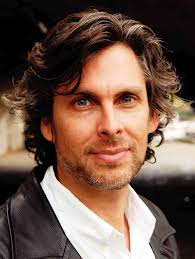
If you are looking for a good escape this summer, there is no better place than the East Bay area of Oakland, California and the world that Michael Chabon has created around the Brokeland Records Store. No one draws characters as well as Chabon and when he uses the music business as a setting for their hopes and dreams, foibles and failings, the result is rich reading.
Here are some of the characters you will meet in Telegraph Avenue.
Archy Stallings, “moonfaced, mountainous, moderately stoned…wearing a tan corduroy suit over a pumpkin-bright turtleneck that reinforced his noted yet not disadvantageous resemblance to Gamera, the giant mutant flying tortoise of Japanese cinema.”
Nate Jaffe, his partner and fellow musician, “who showed up for work under a cloud. His bad mood a space helmet lowered over his head, poor Nat trapped inside with no way to know whether the atmosphere was breathable, no guard to tell him when his air supply would run out.”
One of the regulars at the store was Cochise Jones, “with that inveterate hunch to his spine from fifty years conducting experiments at the keyboard of the Hammond B-3.”
Jones travels with a parrot named Fifty Eight on his shoulder, who could give out “a note-perfect reading of Jones’ take on the old Mahalia Jackson spiritual, Trouble of the World.”
There are more, like the ex-NFL star turned record store and real estate magnate, a funeral director who’s linked to Archie’s dad Luther Stallings (the star of kung fu blaxploitation films in the 70s trying to find the money for a comeback with his co-star Valletta Moore: “Do what you gotta do. And stay fly”) and Archy’s pregnant wife, who is a midwife.
The basic plot is pretty standard. The record store is going under, and the developers will try any trick they can to get them to sell out their anchor position for the new “mall.”
While this is not the paean to life in a record store that Nick Hornby created in High Fidelity, it is an admirable entry in the genre. Here are some samples of Chabon’s use of the music mystique.
--The science of cataloging one-handed. Pluck a record from the crate, tease the paper sleeve out of the jacket…waiter the platter out with your fingertips touching nothing but label. Angle the disc in the morning light …to tell you the truth about the record’s condition.
--Archy tended to make up for his hypercritical attitude toward the condition of vinyl records by going too easy on human beings.
--Only Mr. Jones had always stopped to drop a needle in the long inward spiraling groove that encoded Archy, and listen to the vibrations.
--Cochise began his vandalism in earnest, snapping off bright bunches of melody and scattering it in handfuls, packing it with extra notes in giddy runs.
Chabon broadens his story from the confines of the record store and its crates of musical history to offer comments on the struggles of the civil rights era and the cultural habits of today’s Berkeley hipsters. At times his plots and characters careen from crisis to crisis like Keystone Kops eventually to be reined in by enduring ties to family and history and music.
Telegraph Avenue is the age-old story of people pursuing dreams while trying to figure out the rent. Can we keep the band together? Can we hold on to music etched onto vinyl?
--
Saturday, June 15, 2013
Rock Hall of Fame Surprises
One good lyric line can hook me on a song or a performer in a New York Minute. The other night on The Daily Show it was the ageless Mavis Staples when she sang, “I like the things about me that I once despised.” That seemed a hopeful pick-me-up for aging boomers.
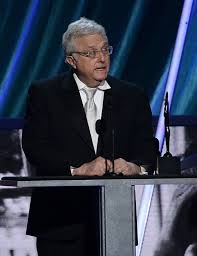
And if laughter is the best medicine, Dr. (Randy) Newman was making house calls recently during his set at the Rock and Roll Hall of Fame presentations in Los Angeles. Don Henley, looking like a psychologist from central casting in black frame glasses and white goatee, noted that Newman once told him he thought rock and roll was too serious and needed some good laughs.
Newman, who opened the show with “I Love L.A.” featuring those spring chickens, Tom Petty, Jackson Browne and John Fogerty,” then proceeded to bite the hand of his contemporary peers with the song, “I’m Dead But I Don’t Know It.”
Newman said he wrote it because he was concerned that youngsters in the music business couldn’t get ahead because the touring stages and recording studios were filled with his buddies who wouldn’t retire. Here are some samples:
I have nothing left to say
But I'm gonna say it anyway
Thirty years upon a stage
And I hear the people say
Why won't he go away?
When will I end this bitter game?
When will I end this cruel charade?
Everything I write all sounds the same
Each record that I'm making
Is like a record that I've made
Just not as good
And the chorus in a call and response (with Henley and the band)
He’s dead, he’s dead, he’s dead
I don’t know it.
The Hall of Fame Show was a slick Hollywood style production that despite its three plus hours entertained with nice biographies of the honorees, tight musical productions and a few surprises.
--John Mayer displaying some hot guitar chops while presenting Albert King. I knew Gary Carter Jr. was good but my image of Mayer was as a heartthrob crooner.
--Harry Bellafonte still carrying the banner for equal rights and looking as young and handsome as when he was singing on stage with dock workers unloading bananas. He presented Public Enemy as “radical, revolutionary and fearless artists,” Chuck D reminded everyone, “Let’s all not forget, we all come from the damn blues.”
--Heart’s mega hits, "Crazy on You," "Magic Man" and "Barracuda" can still sound fresh when performed live, despite years of being scorched into your brain from top 40 radio. They, too, took a respectful tone for the evening when Nancy Wilson said, “Music is the real church. Music makes us all equal and perfectly human.”
--Rush, another radio staple, has not lost a beat or a step after 45 years on the road and 47 million albums. Guitarist Alex Lifeson’s acceptance speech, “Blah, Blah,Blah” was an instant classic, the perfect send up of every award ceremony ever. Look it up on You Tube.
It was nice to see Quincy Jones honored as well as Lou Adler, the legendary record producer who brought us The Mommas and Poppas and Carole King and led Paul Simon to write the line, “I’ve been Lou Adlered.” Donna Summer’s untimely death last year may have helped vault her to the head of line after others had been kept waiting for decades.
The finale included one last tribute to the blues with an all-band jam on "Crossroads." The show, which aired on HBO, may get another rotation in summer reruns.
Subscribe to:
Posts (Atom)