Wednesday, July 6, 2011

A Capitol Fourth: Motown on The Mall


In Washington, D.C., when someone says, "Bring in da funk, bring in da noise!" it usually just means Congress is back in session. But this Fourth of July weekend, when the people took over the mall for fireworks and the Smithsonian Folk Life Festival, it was the real thing. This year's tribute to Rhythm and Blues featured some founding fathers (and mothers) of the modern music era. For me the main attraction was The Funk Brothers, another group of studio musicians who have shed the phrase "back-up" and become their own act, show band and even documentary film (with award-winning sound track).
Assembled in Detroit's Motown studios starting in 1959 they played for everyone that Berry Gordy invented or produced: The Temptations, Supremes, Martha and the Vandellas, Jackson Five, Marvin Gaye, Four Tops, et al. They were introduced as having played on more # 1 hits than the Beatles, Elvis Presley, the Rolling Stones and the Beach Boys combined. Numbers aside, the music they created has become part of our cultural DNA, from 45s to film soundtracks to television commercials. All they had to do was to hit the opening chords to "I Heard It Through the Grapevine" and the packed tent ooohhed and aaahed in anticipation of listening pleasure. The dance floor was jammed for hit after hit, from "Heat Wave" to "Dancing In The Street" and even audience tryouts for "My Girl" solos because everyone knows those lyrics.
Watching tourists and baby boomers boogieing in the 94-degree heat made me wonder if the Park Police had some ambulances idling nearby because "there aint no party like a Funk Brothers Party cause a Funk Brothers Party don't stop."


Earlier we caught a set by the legendary doo-wop group, Sonny Til's Orioles. There are no original members left from the Baltimore days but this group would make the founders proud the way they carry the musical mantle of being the "first" R & B vocal group. Dressed in matching light blue leisure suits (a basic jumpsuit-pajama style that seemed appropriate for a hot July day) they sported gray beards and bald heads. But when they launched into the Orioles first hit, "It's Too Soon To Know," recorded in 1948, it gave new meaning to the word ageless. It was as if their bodies had changed around their voices which still sounded as fresh and young as we all once were. They too had us up dancing with hits like "Baby Please Don't Go," "Mother-in-Law" and "Crying in the Chapel." Their show ranged from a song written during World War II, "Why Don't You Write Me" to Michael Jackson's "I'll Be There."

We also sampled a few songs by Shirley Jones and the Jones Girls and Nat Dove and we stuck around for a glimpse of Swamp Dog (aka Jerry Williams) a Virginia native who quit his job as an A&R man for Atlantic records (Patti Labelle, the Drifters and Gary U.S. Bonds) for a solo career that produced what The Washington Post called "the fiercest, funkiest album the world still has never heard," Total Destruction To Your Mind. The title track opens with these lines:

Sitting on a cornflake
Riding on a rollerskate
Too late to hesitate or even meditate.
Always looking up what's down,
They've come to get me from the lost and found.
But believe me I'm feelin fine
To the world I toast some wine,
then
I do total destruction to your mind, mind, mind.


Swamp Dogg did not disappoint, appearing in a velour suit the color of lime green sherbet with matching fedora and tie.


It was great day for listening to music that not only made history but made you tap your feet and smile.

Thursday, June 23, 2011

Clarence Clemons: The Big Man Leaves the Band


I have been wondering why the death of Clarence Clemons has hung over me like a dark cloud. Every few days, there is an obituary about some music pioneer or rock and roll sensation who has died, the passing of a generation. But this event was somehow different and I have been looking back for answers.
As a fan of Bruce Springsteen and The E Street Band since before he was on magazine covers I have marveled at how his music has evolved, remaining thought-provoking and entertaining for decades. When Clarence brought his one-man horn section to the band, it was not just the straw that stirred the drink, it was more like a Waring Blender that mixed up the music to produce a new sound. From the guitars and drums and harmonica of folk rock, a big band sound emerged that produced the blockbuster album Born to Run.


The cover art for that gives the clue to the chemistry between the two front men: Clarence made Bruce laugh. I think he also could keep Bruce on an even keel even as he skyrocketed to superstardom. You just got the feeling that Clarence did not put up with bull---- from anyone (not even Bruce).
It seems in retrospect that Clarence's towering presence gave Bruce the cover he needed to keep experimenting and reworking his musical styles. His "partner, his friend" could be both a sounding board in the studio and the go-to guy on stage when the band needed a kick-start. And I wonder if back in the early days of playing in little seaside bars, that a lot of drunks thought twice about messing with the skinny lead singer when Clarence was on stage.

More recently Clarence became the big finish to Bruce's lengthy musical introductions of the E Street Band members ("and on bass, the man whose mother was a talent and whose father was a talent...Gary Tallent). He didn't have to remind the audience what instrument Clarence played, he just slid on his knees in front of the high priest in the temple of soul and rock and roll.

It was a good thing for Bruce and the rest of us that knee trouble kept Clarence from making it in the NFL and even though his passing seems to mark the end of the Glory Days for the rock and roll generation, his music can still bring back those memories.

Saturday, June 11, 2011

What makes a great song? John Hiatt on Treme


A recent episode of HBO’s Treme featured a “live” performance by a dapper John Hiatt of his song, Feels Like Rain, which resonates in the post-Katrina setting of the show.

Down here, the river meets the sea
And in the sticky heat I feel you open up to me
Love comes out of nowhere, baby, like a hurricane…
Feels like rain.

Almost as good as the cameo was the discussion that followed between Annie, the violin busker and her new mentor, Harley Watt. Annie says, “Good song.” Harley says, “Great Song.”  For those who have not been watching Treme, Annie is trying to boost her career by writing songs but without much originality. Harley has taken her to see Hiatt for educational purposes.


As they walk home,  Harley asks what was great about it.
Annie: The melody is simple, like the blues. It’s not locked into those chord changes.
Harley: Yeah, the music gives you what it can. Keep going
Annie: The lyrics not so simple. I mean it starts off and he’s singing about the weather, the river , the sea and you realize it’s New Orleans. But then he isn’t singing about New Orleans. It’s really love he’s got on his mind.
H: Okay
A: And love is not simple. It’s a little dark sometimes  and a little dangerous—like New Orleans.
H: (laughs)
A: And he’s riding it out, no matter how rough it gets. He’s like us, now, after the storm.
H: Hiatt wrote that song 20 years ago darlin.' You still had training wheels on your bike and nobody had ever heard the name Katrina.
A: Really?
H: That’s what makes it a great song.

One of the ironies here is that Harley is played by a grizzled, grandfatherly Steve Earle, a pretty fair country singer-songwriter in his own right. The other is that it takes a television series by David Simon to give John Hiatt his due after all these years. (After some twenty albums, he’s gotten several Grammy nominations but no trophies.)

Hiatt, who was born about six blocks from where I went to grade school in Indianapolis, is one of those artists who is more revered by musicians and singers than the general public. It’s almost easier to list who has not covered his songs than the myriad of people who have: Bonnie Raitt (Thing Called Love) to Eric Clapton and B.B. King (Riding With the King) and Roseanne Cash (The Way We Make A Broken Heart) to The Neville Brothers (Washable Ink).

Wikipedia lists the following musical genres for Hiatt: Americana, folk rock, country, blues and Heartland rock.  I would add comedy because he can turn a funny line (“We rolled that Camaro like a cowboy cigarette”).
Wikipedia does not include the fantastic collection of covers that Rhino released in 1993,
“Love Gets Strange.”  It would be the perfect starter album for Annie’s songwriting 101 course.

Batten down the hatches
But keep your heart out on your sleeve
A little bit of stormy weather,
That’s no cause for us to leave...

Feels like rain
(Copyright Lillybilly Music 1988)


Friday, June 3, 2011

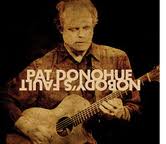
Pat Donohue: From Wolftrap to Lake Barcroft


It is not often that you get to put a face and fingers to a voice and guitar you have been listening to on the radio for years but we got a chance over the holiday when Pat Donohue stuck around after his Prairie Home Campion shows at Wolftrap (and NPR) to do a house concert in our neighborhood.

Stepping out of Garrison Keillor's shadow and into the solo spotlight with his acoustic Martin (Pat Donohue model), Donohue showed his virtuosity as a finger picker (former national champion) and his versatility in doing everything from touching ballads to hot Memphis blues licks and rambling Beatles medleys.

But what had me and the rest of the 80 guests rolling with laughter were his witty takes on modern life.
His lament that "I get the blues when I excercise" is prompted by his baby's complaint, " I think you're sweet but when I hug you my hands don't meet."  Nevertheless, "she's got me running, biking, running hiking, jogging everywhere I go...until I ain't got a muscle that's not in pain."

Or take the Irish Blues in which the verses are done in somber march time. "My brother's a priest, my sister's a nun and my wife  is against any measure of fun. So I go out and get the job done."
 But the chorus is a rollicking Irish jig.
"And last night...we really got going.
And last night the Guiness was flowing.
The singing and dancing I couldn't refuse.
I woke up this morning with the Irish Blues"

His paean to Chet Atkins is a tribute to how he and every other guitar picker in the world learned at the master's knee:  "I'm just sitting in the basement, stealing from Chet."

Donohue has done more than learn(or steal) from Chet and it was mesmerizing to watch him play from the second row of the living room. I was struck by the fact that his fingers were not long and delicate but looked more blue collar. They didn't "dance" across the strings, rather he massaged them at a speed that seemed both impossible and effortless.  Whether he was pounding through the Statesboro Blues or skipping through Banks of the Ohio, he could coax an amazing range of sounds from the guitar, mixing and matching styles seamlessly.

If his satires were rib tickling, his love songs were heart breaking.  Take this sample from Too Gone:
"If I was less, less like I am and more like I could be
I would still have her love, the sweetest I've ever known.
But it's too late...and it's too bad....she's too gone."


On the new CD (from Bluesky Records) his guitar is complemented on that song by Joe Savage on the pedal steel. Rich Dworsky (another PHC regular) adds piano and organ. The CD is called Nobody's Fault and each time I listen to it, Mr. Pat Donohue from St. Paul, Minnesota hits my music sweet spot six strings from Sunday.

Wednesday, May 25, 2011

Still Swinging at Seventy...Bob Dylan to Paul Simon


Amidst all the hoopla over Bob Dylan's 70th birthday, the mainstream media is having a field day with the phenomenon of the stars of the sixties pushing into their seventies and there does seem to be a trend (can a USATODAY poll be far behind). Unlike the proverbial old soldiers who were supposed to fade away at war's end,  rockers have apparently found the fountain of youth in music. You can't pick up a newspaper or turn on a radio station without learning of a new album or a reunion tour.  Stevie Nicks (67) has a new CD as does Emmy Lou Harris and Aretha Franklin.  The Beastie Boys  are only in their forties but got this headline in the NYT, "The Droll, Buzzing Grandpas of Rap," for their new album.
The Cars  are on what the Wash Post describes as "yet another won't ever happen rock reunion tour" to back their first new album in 24 years. Even Donny and Marie are reuniting.  Robbie Robertson is back off the sidelines with a new CD and at the top of the retro heap is the music master of the last 50 years Paul Simon.
Something is happening here but we don't know what it is do we Mr. Jones?  Maybe the reunions are happening because as Steve Earle said recently,  "I'm no longer as addicted to being right as I used to be." Maybe once you get to be a star, your fan base is big enough to sustain any CD you release. Maybe we are longing for the good ole days when the music was memorable and we thought it could change the world.  Maybe global warming is making everyone mellow and able to get along with other large creative egos.
In some cases, musicians are going back to their roots and American music roots for inspiration and new takes on old standards. Dylan has been doing this off and on for years. Willie Nelson relaunched his career with tunes from my parents youth. (I recently heard Jeff Beck's version of Somewhere Over The Rainbow and realized that since I knew all the words, it was a perfect instrumental. When I came across Jerry Lee Lewis doing it, I was blown in another direction.)
In other cases, the musicians do indeed have something new to say. Booker T. Jones (minus the MGs) has a great new album out, The Road From Memphis, but then he's only 66 (and he studied music at Indiana University).

Speaking of music and higher education, a belated tribute to the late Bob Flanigan, one of the founding members of the Four Freshmen, a group he helped create while an undergrad at Butler University(and you thought it was just a basketball factory). The group produced some 50 albums and 70 singles and was cited as an early influence on Brian Wilson (see our post of April14).  Flanigan  retired after nearly forty years of touring but the group continues. It's hard to quantify the impact the Four Freshman must have had on other harmony groups as well as individual singers who came of age during the 1950s.  Here's a link to the AP/IndyStar obituary:
www.indystar.com/article/201105161609/ENTERTAINMENT/110516030.

In closing, a couple of memorable quotes. From Cyril Neville, performing with Tab Benoit and Anders Osborne in The Voice of the Wetlands All Stars on their new CD, Box of Pictures. Admitting he has drawn fire in the past from criticizing government action that has destroyed Louisiana wetlands, he allowed:  "I can't bite my tongue cause my soul will bleed."

Finally this quote goes out to all the race fans (from Indiana and elsewhere) on the eve of the 100th anniversary of the Indianapolis 500. Marco Andretti, who started his final qualifying run just 50 seconds before the closing gun went off, said after he  finished:  "I was either going to put it in the show or in the wall."

Some good advice for aspiring musicians and the rest of us. Happy Memorial Day.

Friday, May 13, 2011

Randy Newman on The River: From The Kingfish to "Treme"

News and video about the  flooding of the Mighty Mississip sent me to the vault for my favorite Randy Newman songs and I came away with several thoughts:  How prescient he was back in the early 1970s; how many of his themes still resonate today.


It begins with "Louisiana 1927" (the year of the record flood that prompted fifty years of levee building).

What has happened down here is the winds have changed
Clouds roll in from the north and it starts to rain
Rained real hard and for a real long time
Six feet of water in the streets of Evangeline. 


No one blamed Global Warming then but that was about the time, Henry Ford was putting a car in every garage.
How about this from "Kingfish:"

Who took on the Standard Oil men
And whipped their ass
Just like he promised to do?

Does that remind you of any recent Congressional hearings?

Randy's  biting classic, "Rednecks" begins with seeing Lester Maddox (ax handles for sale at the front door and former Georgia governor) and ends with the rousing chorus:
We' re Rednecks, We're Rednecks
And we don't know our ass from a hole in the ground
We're Rednecks, We're Rednecks
And we're keeping the niggers down.

I'll leave it to your imagination as to which part of the political spectrum would fit that label today. In between this anti-hymn to southerners is Newman's scathing indictment of the plight of the Northern "Negro" who is free to be put in a cage in Harlem, south Chicago, east St. Louis, Hough, Fillmore and Roxbury.

The writers on HBO's Treme gave a nod to this song by referring to the local boys:
(We got) college men from LSU. Went in dumb. Come out dumb too! Well at least they can play football.

The tunes of the seventies about the times of the thirties bear a scary resemblance to the prospects of the twenty-teens.
I know it may sound funny
But people here are running out of money
We just can't make it by ourself
It is cold and the wind is blowing
We need something to keep us going
Mr. President have pity on the working man.


Some liner notes on this album:  Ry Cooder plays electric guitar, Russ Titelman electric bass and Glenn Frey, Don Henley and Bernie Leadon provide background vocals.

Randy Newman was born with a musical silver spoon in his mouth (his uncles included Hollywood film-score composers, Alfred, Lionel and Emil Newman) but few in tinsel town have done as much with their musical genes as Randy has.  Not only has he won five Grammys, three Emmys and two Oscars (while being nominated 20 times!) he is an official Disney Legend.  While you probably won't find his albums on sale in The Magic Kingdom gift shops, they should be required listening for every poly sci 101 course.  As the election season heats up and the rivers keep rising, take a listen to some Randy Newman. The lyrics may make you gnash your teeth or make you laugh or make you wonder why but the music will soothe your soul.

President Coolidge came down in a railroad train
With a little fat man with a note-pad in his hand
The President say, "Little fat man isn't it a shame
what the river has done to this poor cracker's land.
Louisiana, Louisiana
They're trying to wash us away

Lyrics copyright Warner Brothers Records 1974

Friday, May 6, 2011

Col. Pickering Rescues the Music Room

What's this? It's available on vinyl?  Ask your parents.

----John Stewart plugging the Foo Fighters new "album"


You never realize how old your audio equipment is until you try to replace part of it or get something fixed. Take the turntable pictured above. I can't remember when I got this Technics (D303) but at the time it was state of the art and Richard Nixon was President.  Its virtue was reliability (no belts to break) and it runs as smoothly today as it did when I bought it. So the other day when I heard static instead of the opening song on Surf's Up, I  began checking all the connections, thinking a cable had come loose or the receiver was developing a bad channel.  After tightening everything I could, I dropped the tone arm again, only to watch it slide across the record.  Lifting up the tone arm to check the needle for dust, I was surprised to see there was no needle left, just the cartridge. (Industrial diamonds are not for ever.)

I knew this was not going to be an easy fix. The last time there was a needle problem, I drove to the mall and a store called Needle in the Haystack, picked out what I could afford and stuck it into the cartridge. Of course today you can buy cartridges on the internet or you can ship a turntable to a repair shop. (Click here for instructions on packing your turntable.) But I no longer trust myself to wire a cartridge properly and had no idea what to replace my ancient Ortofon with (its model number no longer shows up). Maybe it would be cheaper just to buy another turntable but who buys a turntable today and how do you know what your getting if you pick up something used on Ebay?

The internet turned up no local repair shops (one place I called thought I wanted to replace the turntable in my microwave); the yellow pages showed nothing. My neighborhood list-serve  yielded one suggestion (phone no longer in service) and one offer of their vinyl collection. Finally the nearby Appliance Fix-it shop gave me the number of AAA Electronics. Voila! They worked on turntables.

Turns out this was the same little shop where I had taken my VCR  several years ago. It is  stacked floor to ceiling with TVs, flat screens, speakers, cables, and a lot of dust.  George had bad news: no needles. But he did have a cartridge. So for $85 plus labor I was back in business with a Pickering in the tone arm.

A funny thing happened last night when I decided to test it out with some well worn favorite albums. I heard new music. Turns out I had not milled the grooves into muddiness and filled them up with dirt and grit over the years. I just needed a better quality pickup. Pickering! By George, you have got it!


I have never been one who gets all syrupy over audio quality the way reviewers like to wax eloquent about the fruits and nuts they taste in wine. But I have heard the light. At the risk of sounding silly, it was like hearing the different instruments stacked one on top of another. I imagined that each recording track had its own geologic level in the groove. It was sound quality that I had not heard in my Bose systems or on XM radio.  Oh, this is what deejays hear in their headphones! But I was listening through the same ancient KLH 17 speakers.

Until now, I had relegated vinyl recordings to the nostalgia category. Now I see why musicians want to record their new work on this old format. And I fear that I will once again start buying music on those big black discs.