Tuesday, November 26, 2013

Happy Arlo Guthrie Day


The golden era of rock in the late 60’s and early 70’s produced much great music and many pop stars but it led to only two epic poems.
Don MacLean’s American Pie was a mega hit in 1972 that is still in regular rotation on classic rock radio today. It’s music history that began with a lament for the lost careers of Buddy Holly, Richie Valens and The Big Bopper who died in a plane crash in 1959.

Arlo Guthrie’s saga about his brush with the law on Thanksgiving Day in western Massachusetts is a send up of his trivial misfortune that he whips around into a stinging protest against the much larger tragedy of Vietnam.  As an undergrad, I helped wear out the grooves on Alice’s Restaurant (and Massacree) and many of his most memorable phrases (27 8X10 color glossy photographs with circles and arrows and a paragraph about each one on the back…a typical case of blind justice…shrink, I wanna kill…have you rehabilitated yourself?) became the parlance of our generation.

As the war and the draft faded, Arlo’s incredible monologue drifted into the memory shadows except for a few loyalists. One group was the deejays at the DC area alt-rock station, WHFS, who made a point of playing it every Thanksgiving. We programmed our schedule to include time to listen (and sing along) for the 25 minutes it takes Arlo to wait for the chorus to come around again. As our kids got older they incorporated the tradition and the lyrics in their routines. Then a colleague  bought me the CD version just as the radio station went under so we could listen while driving over the river and through the woods.

Over the years, the Alice saga has crossed my path is some wonderful ways. I met Venable Herndon who co-wrote the screen play for the movie (directed by Arthur Penn). I have a great t-shirt from the Group W Bench Head Shop in New Haven from my friend Elizabeth. As recently as this summer I started an email thread about “picking up the garbage” left by kids on one of our beach areas. My neighbor wrote how he hated the song because as a 14-year-old he had a camp counselor who sang it in its entirety. All day long.

That might be a little much even for me. I can recommend listening to it at least once a year and Thursday is the perfect day. There’s always some garbage that needs to be picked up and a war that needs ending.  And it’s nice to know there is still a place, “you can get anything you want.” So Happy Thanksgiving and thanks to Arlo Guthrie for capturing a moment in time and spirit.


Here’s a youtube link if you don’t have a copy handy.
http://www.youtube.com/watch?v=LjKF7aQthcQ


Sunday, November 10, 2013

Jimi (Hendrix) We Hardly Knew You


When I started watching the PBS special on Jimi Hendrix I was asking myself why I did not consider myself a big fan. After watching two hours of “American Masters,” I realized that his career had flashed across my music radar like a burning meteor and was gone before it could grow on me.

It was barely more than three years from his explosive debut at the Monterey Pop Festival until his death in September 1970 in London. He released only four original albums while alive and prudish producers kept him off the Ed Sullivan show. Despite that, he connected with the Woodstock generation in a way that transcended race (bass player Noel Redding and drummer Mitch Mitchell were both white) and musical genres.

Listening to him play during the show, I realized how he led the way into psychedelic music and created the mold for heavy metal bands while not losing his blues and rock roots. He certainly was an American original as a guitarist, songwriter and performer. And when Jimi covered a song, he owned it (“Hey Joe,” “All Along The Watchtower,” and “The Star Spangled Banner”).

His back story is well-told in this documentary. His parents separated and later reunited. He joined the Army and became a paratrooper until he broke an ankle on his 25th jump.  He played the Chitlin Circuit backing up The Isley Brothers, Little Richard and Wilson Pickett among others.  His first break came when Chas Campbell left the Animals to manage him and took him to England where he wowed fans and rock stars in clubs.

When the Monterey promoters tried to get the Beatles to perform, Paul McCartney suggested they invite Jimi Hendrix.  It was there the world got to see his tricks of the trade: playing behind his neck, playing with his teeth, using the amp and the mike stand as finger picks. It is fascinating to see how he keeps the music moving forward as he does all these gyrations. Then of course he lights the guitar on fire (and the band plays on).

Jimi’s humor comes through in the rare interviews he did.  Asked about the gimmicks he used on stage, he replied,  “The whole world is a gimmick.”   When Dick Cavett lauds him as one of the best guitarists in the world, Hendrix demurs.  “Maybe the best guitar player sitting in this chair.”

Despite the antics and costumes, Hendrix remained dedicated to his music and worked at this craft around the clock. As Rolling Stone writer, David Fricke, put it, “Jimi had the faith the guitar could take you someplace you’ve never been before and he made you believe it.”

Jimi reached the top of the music mountain when the 1968 release, “Electric Lady Land,” hit number one on the charts and brought along “Are You Experienced” and  “Axis: Bold As Love” into the top 20.

The stage show clips are riveting but the quiet ballads and blues riffs are the scenes that showcase the purity of his voice and playing (don’t miss the acoustic song at the end).

The story builds to that watershed event, Woodstock.  Jimi didn’t hit the stage until 9 Monday morning when he began by greeting the soggy diehards with: “I see that we meet again.”  He ended the set with the iconic version of the National Anthem that still seems as fresh and innovative as it did 44 years ago. He spoke of the time and to the young people caught up in the sixties.  “(I did it) the way the air is in America today,” he told an interviewer. “The air is slightly static.”


“American Masters, Jimi Hendrix: Hear My Train Coming” is airing on PBS stations this week, is available on line at pbs.org and for sale on DVD.


Sunday, October 20, 2013

Don't Know Much About History


 But I am still learning thanks to the latest wave of books, stage shows and documentaries about rock and blues music.  This weekend is the opening in D.C. of the documentary, “Muscle Shoals” from director Greg Camalier. Most of us know of the Alabama town where The Rolling Stones recorded  “Brown Sugar” and “Wild Horses” but the history of producer Rick Hall and his house musicians, The Swampers, also includes some major milestones.

Percy Sledge was an unknown amateur when Hall got him in for his first recording session. The result: “When A Man Loves a Woman.” Duane Allman pitched his tent in the parking lot until they let him sit in on sessions, including one with Wilson Pickett doing “Hey Jude.” Etta James and Aretha Franklin laid down hit tracks there and Lynyrd Skynyrd came up with “Freebird” while on the banks of the Tennessee River.

A documentary released earlier this year, “Born in Chicago,” looks back at the work of Muddy Waters (“The Blues Had a Baby and They Named It Rock and Roll”) Howlin’ Wolf and Chuck Berry and their influence on a younger generation. Marshall Chess, founder of the namesake studio and record label, narrators the film which focuses in part on Mike Bloomfield.  No less an authority than Bob Dylan pays tribute to his standing by describing him as “simply the best guitarist I had ever heard.”

The history lessons continue on stage. In Chicago, the Black Ensemble Theater Company is paying homage  to Curtis Mayfield, lead singer with The Impressions and funk pioneer, with “It’s All Right To Have A Good Time.”  On Broadway the tribute shows to Janis Joplin (Vinyl Stats August 14) and Billie Holiday will be joined by “Beautiful,” the Carole King musical.

In addition to new memoirs from Graham Nash and Neil Young, there are two books out that deal with music that may have changed history and not just music. In Ready for a Brand New Beat, Mark Kurlansky argues that the super hit of 1964, “Dancin’ in the Street” from Martha & The Vandellas became a political anthem that helped spark the social upheaval and urban riots of the sixties.


And did Bruce Springsteen have more to do with the end of the Berlin Wall than Ronald Reagan? Erick Kirschbaum thinks so and outlines his argument in Rocking the Wall.  The date was July 19, 1988 and The Boss was allowed to do a live concert in East Berlin. Between songs, Springsteen, in German, told the crowd of 300,000 (and millions watching on TV),  “I’ve come to play rock and roll for you in the hopes that one day all the barriers will be torn down.” He then launched into “Chimes of Freedom.”


Whether you buy Krischbaum’s thesis or not, it gives new meaning to the Great Man theory of history.

Thursday, August 29, 2013

Live in Peace Linda Ronstadt


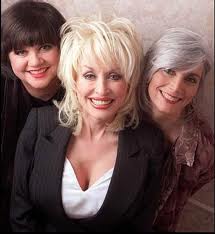
Like millions of fans I was saddened to hear the news of Linda Ronstadt's Parkinson's disease, that is effectively ending her singing career, one of the most amazing musical journeys of her (and our generation). Although she had faded from the dizzying heights of her glory years  (TIME covers, dating Jerry Brown and George Lucas), Linda  pretty much did it all and reinvented herself so many times that she seemed to have multiple personalities. She was present at the creation of folk-country-roots rock, did the Pirates of Penzance in Central Park, had platinum  albums of pop standards with Nelson Riddle, sold  millions of copies of traditional Spanish songs and co-anchored the power-pop Trio albums with Dolly and Emmy Lou.

My first reference book, Lillian Roxon's Rock Encyclopedia, lists her as Linda and The Stone Poneys with two interesting facts. Different Drum (still getting airplay after 46 years) was written by Mike Nesmith of the Monkees fame and her guitarist then was Kenny Edwards who rejoined her on all the hit albums of the 1970's.

Has anyone had a better string than she did during that era? Heart Like A Wheel, Prisoner In Disguise, Hasten Down the Wind, Simple Dreams, Living in the USA.  She had the voice and the emotional involvement to make classics out of work from the best song writers of the time, whether it was Warren Zevon, Roy Orbison, J.D. Souther, Lowell George, Jagger & Richards, James Taylor, Neil Young, or Anna McGarrigle. They could perform their songs, she could sing them. Her voice was magical and it seemed to soar out of the stereo speakers.

Our paths sort of crossed three times. The first was at the Indiana State Fair in 1977 when she was wearing red white and blue tops and hot pants. She was the rock star who could croon the paint off your pickup with a Hank Williams song.

The second time was in DC when we saw her at a theater during the Canciones de Mi Padre tour. Our lack of Spanish language skills made the evening less than expected.

The third connection was in the mid-90s during a video shoot in Tucson, Arizona when the sound guy we hired turned out to be her brother, Mike (her other brother was the sheriff there for ten years). Mike was a nice fellow but his beat-up old International Scout ran out of gas enroute to our location and nearly sabotaged the day.

The Trio albums are still some of my most listened to as well as her  1995 CD, Feels Like Home, which includes her takes on After The Gold Rush and High Sierra and has Alison Krauss on fiddle for several cuts.

Linda has enough Grammys and gold and platinum albums to fill a museum.  No doubt she has more than enough stories to fill her new memoir, Simple Dreams. She certainly captured a little piece of my heart with her music.


Wednesday, August 14, 2013

One Night with Janis Joplin


Whether we know it or not, we want our blues singers to be miserable.
In fact, we want them to die.

--One Night With Janis Joplin


Our musical memories tour continued this week with a trip to Washington’s Arena Stage to spend One Night With Janis Joplin before it heads to Broadway this fall. I arrived with some skepticism about just another tribute show for boomers willing to pay for nostalgia.
I left with my ears ringing and the semi-exhaustion of a rock concert.

My first clue that we were in for something different was the eight-piece band (all with 60s style shoulder length hair) which sounded as good or better than I remember the muddy studio albums from Big Brother & The Holding Company. And they were much more versatile, easily moving back and forth from ballad to hard rock to blues.

The star, Mary Bridget Davies, embodies Janis so convincingly (after a national tour of Love,Janis and tours with the current Big Brother band) that you are no longer making comparisons with the original; you are just enjoying the ride. She can move from sad reflection to foot-stomping, hair-flinging blues shouting in the space of a guitar lick.

After warming us up with My Baby and Down on Me, she tore into Piece of My Heart like a freight train out of control. It was all the audience could do to chant, “Come on, Come on,” and wait for the aural crash. Not sure whether it was the rush of nostalgia or the authentic sound but it gave me goose bumps.

The musical numbers were tied together by soliloquies in which Janis talked about her childhood (listening to the Chantelles on 45s) her love of the blues (The blues is just a bad woman feeling good) or her frustrating search for love (No man will be able to do to me what that audience does).

Woven through her musings were reflections on her musical influences and heroines. This is where the show kicked everything up a notch in the person of Sabrina Elayne Carter in the role of “blues singer.”
Her opera-trained voice and fabulous costumes traveled a parallel track as she took on the songs of Janis’ personal heroines. Starting with Summertime from Porgy and Bess, Carter took turns as Odetta, Bessie Smith, Nina Simone and Aretha Franklin. Each time the songs segued from the traditional versions to a Davies/Joplin blues-rock interpretation. Carter’s beautiful voice often overshadowed Davies’ but the contrast seemed intentional. The smooth stylist versus the blues belter; the traditional versus the rebel. When they teamed up on Aretha’s Spirit in the Dark to close the first act, it was like a battle of the bands.

Songs of the second act underscored the irony of Joplin’s instant fame and personal demons with a cloud of irony hanging over several, including I Shall Be Released, Me and Bobby McGee, Ball and Chain and the incredibly sad Stay With Me.

This show was about the music not the tragic ending but throughout the monologues Janis is reminding us of what the blues are about. It’s the carrot, you never get to, she notes. Or this thought, which seemed apt given the age of the audience.

The blues are about time. One day you wake up and look in the mirror and wonder where it all went. That’s the blues.

It’s hard to believe that it’s been more than four decades since Janis left the live stage that she so electrified with her full tilt boogie approach to music and to life.

Despite the passage of time, we still know all the words to Mercedes Benz so we sang it a cappella back to her as part of the encore (and standing ovation) and as a thank you for the music and the memories.


Tuesday, August 6, 2013

Bruce, Mick, Sting (and Darlene): 20 Feet from Stardom


It’s unusual to see a rock music film in which Bruce Springsteen, Mick Jagger and Sting are not the front and center stars but rather the genial patriarchs praising their backup singers and ruminating on the fickleness of music success.

That is just one of the turnabouts in Morgan Neville’s great new documentary about the men and mostly women who have shaped modern musical history from the back of the concert stage and recording studio.

The film grabbed me a few minutes in when Darlene Love joined the original Blossoms in an empty studio and broke into song:
I met him on a Monday and my heart stood still
Da Do Ron Ron Ron, Da Do Ron Ron.


Time has not stood still for Love, and her golden-voiced fellow singers, Merry Clayton, Claudia Lennear, Lisa Fischer and Judith Hill; their ups and downs would make for many a blues song. As tempting as it is to try and recount their fascinating (and frustrating) careers, I won’t spoil it. Just go see it.

Okay I can’t resist. Here are some of my favorite highlights
--Luther Vandross singing backup for David Bowie
--Billy Preston playing organ for Ray Charles (and the Raylettes)
--Tina Turner & the Ikettes

Finally there are the album covers serving here as means of preserving history and used creatively to track the careers of the singers, the groups and our personal history, which seems inextricably benchmarked by the music we grew up listening to.

20 Feet from Stardom manages to chronicle the era, tell some wonderful human stories and showcase the music they gave us…all at the same time. The blending of vintage clips with modern musical reunions is flawless.

Do see this in a theatre as the Dolby Surround Sound alone is worth the price of admission.

Thursday, August 1, 2013

Rock Musicals: Grease to Mormon


Attending two musicals in four days based on rock and roll but were created almost two generations apart got me thinking about how much the music once created for records and radio play has become such a huge creative influence in our culture. The experiences, seeing Grease done by a community theater in a high school auditorium and Book of Mormon by a national company seemed to bookend the spectrum of production values.

For starters, guess which musical this Wikipedia description refers to: “Raunchy, raw, aggressive, vulgar.” That was a reaction to the earliest version of Grease when it began in Chicago in 1971. Clearly it has been homogenized and sanitized over the years although it can still hit some “taboos” for the sake of humor. By the early seventies, recreating the music (and teenage traumas) of the 1950’s could find an audience.

It was on Broadway for a then record 3,388 performances, then twice on film (look for Stockard Channing in pajamas) and then revived again twice on Broadway. The stage version has winning numbers like, "Look at Me, I’m Sandra Dee" and “Born to Hand Jive” and the film gave us top-40 hits like "Hopelessly Devoted To You" and “You’re the One That I Want” and today’s productions mix songs from both. In watching the Alliance Theater production at Chantilly High, it was great to see actual kids playing kids, enjoying the same music as their (grand?) parents and reminding us of those days of sock hops, drive-ins, and malt shops that now we only see on television or film.

Book of Mormon is a different breed of cat but when they dimmed the lights and a light show swam across the walls and ceilings, it was vintage psychedelia from the golden age of Hair and Woodstock. Clearly the South Park guys and their collaborators are products of a rock and roll generation (or two) and know how to tap into that music for energy, nostalgia and comedy.

So it seems like this music is everywhere. On Broadway it is Berry Gordy’s Motown The Musical and Cindi Lauper’s Tony winner, Kinky Boots. In Washington, there is a rock musical called Spin and the Arena Stage’s One Night With Janis Joplin is in its second run before heading to Broadway this fall. Million Dollar Quartet is returning this fall

Stephen King and John Mellencamp have conspired with T. Bone Burnett to create a musical called Ghost Brothers of Darkland County. It is on a limited tour this fall but it’s also a CD and ebook. When the threesome appeared on Stephen Colbert earlier this summer, Colbert summed up the project this way: “You’ve got a ghost story of murder and death, you’ve got love lost and someone with their head eaten off. Are these upbeat summer fun songs?”