Saturday, June 15, 2013

Rock Hall of Fame Surprises


One good lyric line can hook me on a song or a performer in a New York Minute. The other night on The Daily Show it was the ageless Mavis Staples when she sang, “I like the things about me that I once despised.” That seemed a hopeful pick-me-up for aging boomers.
And if laughter is the best medicine, Dr. (Randy) Newman was making house calls recently during his set at the Rock and Roll Hall of Fame presentations in Los Angeles. Don Henley, looking like a psychologist from central casting in black frame glasses and white goatee, noted that Newman once told him he thought rock and roll was too serious and needed some good laughs.
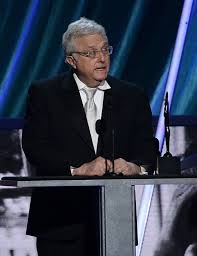
Newman, who opened the show with “I Love L.A.” featuring those spring chickens, Tom Petty, Jackson Browne and John Fogerty,” then proceeded to bite the hand of his contemporary peers with the song, “I’m Dead But I Don’t Know It.”
Newman said he wrote it because he was concerned that youngsters in the music business couldn’t get ahead because the touring stages and recording studios were filled with his buddies who wouldn’t retire. Here are some samples:

I have nothing left to say
But I'm gonna say it anyway
Thirty years upon a stage
And I hear the people say
Why won't he go away?

When will I end this bitter game?
When will I end this cruel charade?
Everything I write all sounds the same
Each record that I'm making
Is like a record that I've made
Just not as good


And the chorus in a call and response (with Henley and the band)

He’s dead, he’s dead, he’s dead
I don’t know it.

The Hall of Fame Show was a slick Hollywood style production that despite its three plus hours entertained with nice biographies of the honorees, tight musical productions and a few surprises.

--John Mayer displaying some hot guitar chops while presenting Albert King. I knew Gary Carter Jr. was good but my image of Mayer was as a heartthrob crooner.

--Harry Bellafonte still carrying the banner for equal rights and looking as young and handsome as when he was singing on stage with dock workers unloading bananas. He presented Public Enemy as “radical, revolutionary and fearless artists,” Chuck D reminded everyone, “Let’s all not forget, we all come from the damn blues.”
--Heart’s mega hits, "Crazy on You," "Magic Man" and "Barracuda" can still sound fresh when performed live, despite years of being scorched into your brain from top 40 radio. They, too, took a respectful tone for the evening when Nancy Wilson said, “Music is the real church. Music makes us all equal and perfectly human.”
--Rush, another radio staple, has not lost a beat or a step after 45 years on the road and 47 million albums. Guitarist Alex Lifeson’s acceptance speech, “Blah, Blah,Blah” was an instant classic, the perfect send up of every award ceremony ever. Look it up on You Tube.

It was nice to see Quincy Jones honored as well as Lou Adler, the legendary record producer who brought us The Mommas and Poppas and Carole King and led Paul Simon to write the line, “I’ve been Lou Adlered.” Donna Summer’s untimely death last year may have helped vault her to the head of line after others had been kept waiting for decades.

The finale included one last tribute to the blues with an all-band jam on "Crossroads." The show, which aired on HBO, may get another rotation in summer reruns.


Thursday, May 30, 2013

Janis Joplin at Wesleyan


Every five years at my Wesleyan Reunion, I learn a few more facts about the visit of Big Brother and The Holding Company and Janis Joplin to our secluded campus on the Connecticut River on March 9, 1968. Five years ago John Lipsky, former chief economist for the International Monetary Fund, revealed he had hosted the band at lunch and found the experience less than scintillating (“So what’s your sign?” she asked).

This weekend I got a new version of the event from Bob Isard who regaled me with several tales of the post concert party hosted by Delta Kappa Epsilon. As house steward he was at the center of things. When Janis arrived, she demanded, “What’s to eat, I am starving.” (I guess the university lunch was not very filling.)

Isard then told of tapping a fresh keg and filling the beer cup of a young lady who was a regular visitor at the DKE house because she had been dating one of the brothers for more than a year. He described her as “Sweet Sally,” the typical preppie undergrad clad in miniskirt, while blouse and sweater. Unfortunately when she turned to leave she bumped into the guitar player for Big Brother and dumped the beer all over him. The guitarist, without missing a beat stepped forward to get his cup filled.

The funny thing was that Sweet Sally was never seen again after that night. Isard has concluded that there was room for her in one of the two Volkswagen Campers the band was touring in so she joined the guitarist on the road.


Another campus concert, this one by the Grateful Dead in 1970 was the subject of a symposium and mini-reunion for those who made that scene. The event offered insights into the work of archivists who try to authenticate bootleg audiotapes. It was reported that the Dead were paid $4,000 for the gig but everyone was admitted for free. The concert took place on May 3. Shortly afterwards the Wesleyan students voted to go on strike in support of the students killed at Kent State. The school was shut down for the year.

One other Dead connection. John Perry Barlow, Wesleyan ’69 (a religion major) was a childhood friend of Bob Weir and began co-writing songs with Weir in 1971. He is also credited with introducing the band members to Dr. Timothy Leary. In 1990, Barlow founded the Electronic Frontier Foundation, a platform he has used for education and legal activism on Internet issues.

And last but not least, I learned that Louis Armstrong played a concert at Wesleyan in 1958. I’ll bet the Chapel was jumping that night.

Thursday, May 9, 2013

April Milestones: Memories of Richie Havens


As we move away from April, that proverbially cruel month, I was touched by the passing of a couple of musical greats and the anniversary of the death of a third.
Richie Havens and George Jones, when paired in the same sentence seem so opposite as to be almost comical. Havens, soft-spoken and weary-voiced, the hard working balladeer.
Jones, the hard-living, outrageous showman whose antics became as legendary as his voice and his career. One toiled on the club circuit (with a brief moment of world fame) and the other had his string of hits, the Grand Ole Opry and the ultimate country music partner in Tammy Wynette.

I got a chance to meet Havens in April of 1968. He was scheduled to do a concert at Wesleyan the weekend after Martin Luther King was assassinated. The concert was cancelled but no one had informed him before he left New York City. When he arrived, a couple of the guys hosting, brought him down to our fraternity house for a cup of coffee before he made the return trip. So we stood around the kitchen of the Beta House for a while, making awkward small talk about the tragedy and why we could not do the concert.

At this point, Havens' album, “Mixed Bag” (released in the musical magical year of 1967) had launched him with a series of great covers, including his rendition of Dylan’s “Just Like A Woman,“ the Beatles’ “Eleanor Rigby” and Tuli Kupferberg’s “Morning, Morning.” It also included a song Havens wrote with Lou Gossett called “Handsome Johnny.”

I don’t remember a lot from that afternoon (it was the 60’s and my thesis was due) but I still carry this image of his presence: Dressed in leather and beads, with rings on every finger and that soft voice and gentle manner that seemed to radiate a “Summer of Love” vibe. It was more than a year before he would make history at Woodstock.


The down home charm that made Havens so likeable also seemed to be one of the ingredients in Levon Helm’s propularity with fans and colleagues. He died in April of last year and there is a new tribute album produced by Don Was called “Love for Levon.” The concert was recorded in October, 2012 and the incredible list of guest artists (Roger Waters, Mavis Staples, Lucinda Williams, John Hiatt, Bruce Hornsby, etc., etc.) reprised much the The Band’s catalogue of hits.


As Don Was told Bob Edwards, “without the Band, there would be no Americana Music Awards.” They left “an eduring, irreversible legacy.”

Was, when asked about the volatle life cycles of rock and roll bands, offered this explanation: “Bands are crazy. They get together with this dream of conquering the world. If they make it, then they set out to conquer each other.”


Friday, April 19, 2013

Celebrate! Record Store Day


Add to the list of spring high holy days (NCAA Final Four, Easter, Masters, Earth Day) a music event: National Record Store Day is tomorrow, April 20. It has become a crossroads between old vinyl (collections sold in the few remaining stores) and new vinyl (pressings of new recordings and remasters from famous artists).
In one of my earliest posts on January 26, 20111 I offered my thoughts about (http://vinylstats.blogspot.com/2011_01_01_archive.html) the joys of time spent flipping through cardboard sleeves and listening to music in your neighborhood record store. While the stores continue to disappear from the landscape they assume an almost iconic status in our musical culture. They are where dreams of fame and fortune (High Fidelity) are nourished or where musicians are discovered (Alabama Shakes found their drummer, Steve Johnson, working in a record store). And they become the metaphor for the conflict between the good old days and the steamroller of progress (Michael Chabon’s, Telegraph Avenue).

I discovered Record Store Day thanks to an article by David Lindquist in The Indianapolis Star profiling some vinyl collectors in Indianapolis. http://www.indystar.com/article/20130416/THINGSTODO02/304160101/Record-Store-Day-caters-collectors-who-deep-groove
Lindquist offers a nice look at Dr. Spin: The World’s Only All Vinyl DJ, aka, Doug Babb, who claims his trove of 200 albums featuring the Moog synthesizer is the world’s largest. It must also be something of a record for Indianapolis to have three record stores, Indy CD & Vinyl, Luna Music and Vibes Music.

The stores have jumped on this bandwagon with live concerts and exclusive sales of new releases sold on the big day. Check out their website (recordstoryday.com) for an amusing video of Jack White taking you on a tour of a vinyl pressing plant or new releases from Billy Bragg, MGMT and the Doors, plus a screening schedule for the film, Last Shop Standing.

The Washington Post reports these special issue vinyl albums are proving a mixed blessing for the stores because their orders are not returnable and if the owners don’t guess right about what the fans want this year, they are stuck with the unsold records.

Even if record stores are not here to stay, it appears that vinyl records are. The Recording Industry of America reports that sales have jumped from just over 1 million to just over 7 million in the past five years. That’s only two percent of recordings sold but at least you can’t pirate vinyl.

Thursday, April 11, 2013

Steve Jobs Rock Star


Just as our grandparents could remember life before airplanes, we can remember listening to music before it became portable (unless you had a car wrapped around an AM radio). Today being able to listen to any kind of music, anywhere, for hours on end seems as natural as breathing.

Such a cultural change kind of creeps up on us (or rather steamrollers us) in the microchip/internet/social media age. Still, it struck me as time flying when I learned that Apple’s I-Tunes Store will be ten years old this month.

How that came to happen is another fascinating chapter in the Steve Jobs saga as retold by Walter Issacson in his biography of the Apple legend. The story has all the elements of a Gordon Gecko movie with corporate intrigue, personal ambition, millions of dollars at stake and the superhero doing battle against all odds.

Of course the saga began with the arrival of the I-Pod: the slick, shiny cigarette box that Jobs unveiled in October of 2001, saying, “This little device holds a thousand songs and it goes right in my pocket.” In musical parlance, it was an overnight sensation.

Apple’s digital system…I-Pod, I-Tunes and computer… worked fine for taking music you owned and going portable with it. But the music industry was being buffeted by big changes. Napster and its followers were making it easy to copy and distribute songs for free and the big corporate players, Warner Music (AOL), Sony and others were watching CD sales drop. At first they tried lawsuits and then they went into partnerships to offer subscription services, but neither was successful.

In rides Jobs on his white horse with a couple of simple concepts. First, he believed that people wanted to “own” music not rent it. Second, he was opposed to theft of creative content. “It’s wrong to steal. It hurts other people. And it hurts your own character.”

Jobs then proceeded to write the rules of the new game: 99 cents a song, sold individually (not as albums), 70 cents to record companies. Then the super salesman turned on the charm to convince AOL Time Warner to get on board, then Universal, and finally Jimmy Iovine of Interscope-Geffen-A&M.

The biggest stumbling block was Sony whose chief then, Andrew Lack, wanted a cut on sales of I-Pods. Jobs refused and played his coalition off against Sony’s fractious divisions. Then he courted individual artists like Bono, Jagger and Sheryl Crow. One artist who became convinced of the symbiosis of I-Tunes to I-Pod, was Dr. Dre, who said “Man somebody finally got it right.”


In less than a year, Jobs had brought the I-Tunes Store to reality, opening its digital doors with 200,000 tracks in April 2003. The store manager had predicted the service would sell a million songs in six months. It sold that many in six days.

Two years later Apple sold its one millionth I-Pod and by 2012, Apple reported sales of I-Pods worldwide had reached 350 million units.

You say you want a revolution? Steve Jobs proved there was more than one way to become a rock star.


Tuesday, April 2, 2013

Phil Ramone & Paul Williams: Makers of Rock History


In reading the recent obituaries of Phil Ramone and Paul Williams I was struck by how the rock producer and the rock writer were connected by only degree of separation: Paul Simon.
In the first issue of Crawdaddy(named for a London Club where the Stones played), Williams reviewed Simon & Garfunkel’s new release, "Sounds of Silence", which he had to buy himself. A copy of that seminal, mimeographed issue in 1966 made it to Paul Simon, who called Williams in his dormitory at Swarthmore to thank him for the review. Crawdaddy predates Rolling Stone and Creem but was eventually overwhelmed by the glitzier magazines. Still, Williams, who also wrote a trilogy on Bob Dylan, set the bar pretty high for writers like Jon Landau and Peter Guralnick, both Crawdaddy alums.

In writing about rock music, my intention was not to judge the records (like a critic) or report on the scene (like a journalist) but to explore as an essayist, the experience eof listening to certain records and feeling the whole world through them.


Phil Ramone crossed paths with Paul Simon a few years latter, producing “There Goes Rhymin Simon” and then helping win three Grammys for “Still Crazy After All These Years.” Reading the list of artists he worked with, first as an engineer then producer, one can’t help but consider him as a giant of late 20th century music. It began with John Coltrane and Count Basie and came full circle with a Grammy for Ray Charles’ duets: "Genius Loves Company." In between, besides Simon, were Dusty Springfield, Bob Dylan, Aretha Franklin, Frank Sinatra, Madonna, Billy Joel and Tony Bennett and many others.

For several decades, in the music business, Phil Ramone was the answer to the question: Who you gonna call? No doubt, one key to his success was his willingness to let the artist have the spotlight. As reported in the NY Times, he wrote that a record producer’s role was much like that of a film director: to bring out the best performance.

But unlike a director (who is visible and often a celebrity in his own right), the record producer toils in anonymity. We ply our craft deep into the night, behind locked doors. And with few exceptions, the fruit of our labor is seldom launched with the glitzy fanfare of a Hollywood premiere.

For a guy who spent his life working with rock stars, he says his personal highlight came from a gig with a Hollywood screen legend. He was running sound when Marilyn Monroe cooed Happy Birthday Mr. President in 1962.

Friday, March 8, 2013

A Fan's Notes: Bob Dylan to Mumford & Sons


Ah, but I was so much older then
I’m younger than that now

Killing time in a bookstore recently (not as easy as it once was) I thumbed through the latest Rolling Stone effort to make a few bucks off rock nostalgia, “Bob Dylan’s 100 Greatest Songs,” before putting it back on the rack. It was mostly old interviews and vintage photos of Bob when he was young and handsome. And the jury picking songs was all male.
Before I could pat myself on the back for resisting temptation, my daughter arrived with her delayed Christmas present. You guessed it: A book of photos by Daniel Kramer of Bob Dylan. It was a souvenir from the 2012 Paris show, Bob Dylan Rock Explosion, which tracked his career from 1961-66. Kramer spent a year on the road with Dylan from which he produced many of the iconic photos that fueled the Dylan marketing machine and mystique and you have seen them in magazines and on album covers. For more on Kramer’s story, here’s a link. lightbox.time.com/2012/03/19/a-year-and-a-day-with-bob-dylan/#1

The gift got me thinking about fandom and how once it sets its hook, you are stuck for life whether it is reliving youth when listening or thanking friends and relatives for their gifts. And while I resisted Life’s 96-page paean to Bob, Forever Young: Fifty Years of Song, I did indulge myself in one Dylan 70th birthday souvenir. The clock pictured above was purchased from a shop dedicated to the music, clothing and lifestyles of 60's called IMAGINE in Mystic, Connecticut (www.imaginemystic.com).

Whenever I start to chastise myself for such foolishness, I run across other examples of fan fanaticism like this passage from Walter Issacson’s biography, Steve Jobs.
Jobs and his pal Steve Wozniak spent a summer tracking down bootleg tapes of Dylan concerts. “I had more than a hundred hours, including every concert on the ’65 and ’66 tour, the one where Dylan went electric," Jobs boasted. “I bought a pair of awesome headphones and would just lie in my bed and listen to that stuff for hours.”

Then of course there is the 60’s counterpart to the Justin Bieber phenomenon, The Beatles. My sister was one swept up by that cyclone, covering the walls and ceiling of her bedroom with photos cut from magazines (something Dad would never let me do). She and her friends each had a favorite but I am not sure whether they drew straws or arm wrestled to get the one they wanted.

More recently, I have empathized with Governor Chris Christie’s uncontrollable fanatic behavior toward Bruce Springsteen. We’ve all been there and are likely to be stuck there as long as someone needs to get us something for a birthday.

News Note from Britain: An obituary of Bruce Reynolds who masterminded the Great Train Robbery in 1963 on the Glasgow to London mail train, noted that his son, Nick Reynolds was a member of the band Alabama 3. Their song, “Woke Up This Morning,” had the good fortune of being the Sopranos theme song. Wonder whether father or son got the bigger haul.


Program Note: Showtime cable will be rerunning next week its music documentary, The Big Easy Express. It features Mumford & Sons, Old Crow Medicine Show and Edward Sharpe & The Magnetic Zeros training from California to New Orleans. It is a high end production that won a Grammy with some fun moments (“we’ve come 2800 miles in a week and a half and had the time of our lives”) and none of the amateurish production issues noted in my last post on the Mellencamp doc. However, after watching the fans enjoy trackside concerts I was left wondering why people would rather make I-phone videos than listen to the music.